
Table of Contents
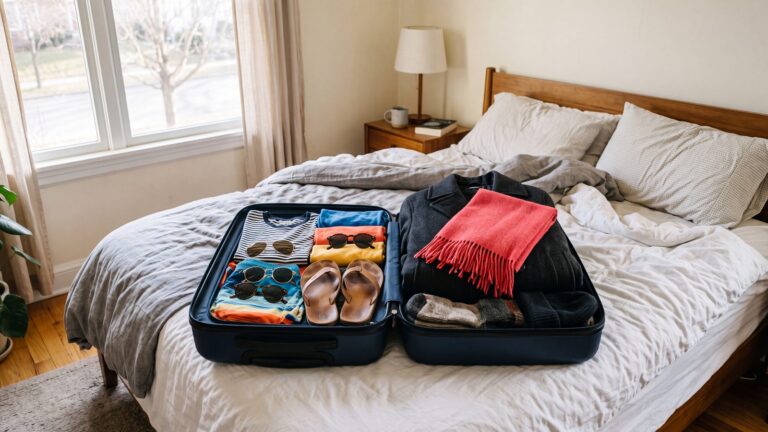
It is the classic Canadian mistake. You are packing for Australia. You look at your suitcase. You throw in: Board shorts. Bikinis. Flip-flops (Thongs). Sunglasses. Sunscreen. T-shirts. You look at your winter coat hanging in the closet. You laugh. I’m going to Australia, you think. I won’t need that.
Stop. Put the coat in the bag.
We are serious. One of the biggest shocks for Canadian students arriving in Australia isn’t the spiders or the slang, it’s the cold. While Australia doesn’t get Canadian Cold (snow and ice), it suffers from a phenomenon we call Indoor Cold. And if you are unprepared for it, you will spend your first semester (June–August) freezing in your apartment.
Here is the truth about Australian winter and exactly what you need to pack to survive it.
1. The Myth: It’s Always Summer
Let’s look at the actual numbers. Australia is a massive continent. While the north (Townsville/Cairns) stays tropical year-round, the cities where most students live (Sydney, Melbourne, Adelaide, Gold Coast) have a distinct winter.
Average Temperatures in July (Winter):
-
Melbourne: 6°C – 13°C (Feels like Vancouver in November).
-
Adelaide: 8°C – 15°C.
-
Sydney: 8°C – 16°C.
-
Gold Coast: 11°C – 21°C.
You might look at 11°C and think, “That’s patio weather in Toronto!” And you’re right. Outside, 11°C is lovely. The problem is Inside.
2. The Reality: Wooden Tents (Housing Standards)
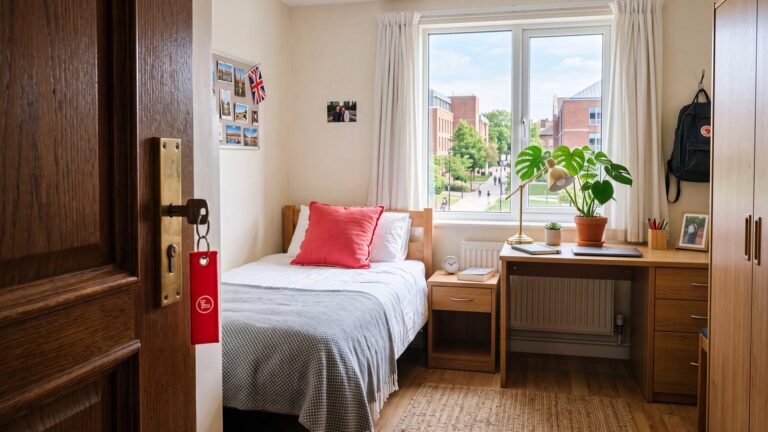
This is the secret nobody tells you. Canadian houses are built to keep heat IN. We have double-glazed windows, heavy insulation, and central heating that runs 24/7. When it is -20°C outside in Toronto, it is +22°C inside your house. You can wear a t-shirt indoors in January.
Australian houses are built to let heat OUT. Most student housing in Australia was built to survive the blistering 40°C summer.
-
Insulation: Often minimal or non-existent in older buildings.
-
Windows: Usually single-glazed glass that lets the cold radiate right through.
-
Central Heating: Almost non-existent.
The Result: If it is 10°C outside in Melbourne, it is likely 10°C inside your bedroom. There is nothing more bone-chilling than waking up in a house that is the same temperature as the outdoors. You will see your breath in the morning. You will study in a toque.
Need to find better housing? We recommended some modern, purpose-built student accommodation providers (which often have better heating) in our Parent’s Guide to Safety and Housing.
3. The Uniqlo Uniform: What to Pack
You don’t need your Canada Goose arctic parka (it takes up too much space). But you do need a strategic Winter Survival Kit.
Item 1: The Puffer Jacket
This is the unofficial uniform of Australian university students. Bring a lightweight down jacket (like a Uniqlo Ultra Light Down or Patagonia Nano Puff).
-
Why: It packs down into a tiny ball, but it saves your life on chilly mornings walking to class.
-
When to wear it: June, July, August, and basically every evening once the sun goes down.
Item 2: UGG Boots (For Indoors)
In Canada, UGGs are outdoor shoes. In Australia, they are indoor slippers. Because the floors are often tile or hardwood and there is no basement insulation, the floor is freezing.
- Strategy: Buy a pair when you arrive (they are cheaper in Aus) and strictly wear them inside your house. Your toes will thank you.
Item 3: A Hoodie (or Three)
The Gold Coast Winter is basically Hoodie Weather. It’s not cold enough for a parka, but it’s too windy for a t-shirt. A good quality hoodie is the most versatile item you can own.
- KOM Tip: Buy a university-branded hoodie (e.g., Bond University or Griffith University) during Orientation Week. It helps you fit in and keeps you warm.
Item 4: A Hot Water Bottle
This sounds like something your grandmother would use. Trust us. Electric blankets are popular, but a simple hot water bottle (hugging it while you study) is the cheapest way to stay warm in a drafty student house. You can buy these at K-Mart or Target in Australia for $5.
4. The Summer Semester Trap
Remember the academic calendar?
-
Semester 1: Starts in February (Summer). You arrive and it’s hot. You think we lied to you.
-
Semester 2: Starts in July (Winter). If you fly home for the Canadian summer break (May–August), you might miss the Aussie winter entirely. But if you stay for the Winter Semester (June–October), or if you are at Bond University (which has a May semester), you will be in school during the coldest months.
Timeline check: Confused about when semesters start? Review our Last Call for February Intake post to see the full calendar.
5. Don’t Learn the Hard Way
We have seen too many Canadian students shivering at a bus stop in July wearing shorts because they “didn’t think Australia got cold.”
Pack the coat. Better yet, pack layers. You are moving to a country with four seasons (even if they are milder than ours). Respect the winter, and you will enjoy the summer even more.
Curious about the weather in your specific city? Check the historical averages on the official Bureau of Meteorology (BOM) website.
Packing is chapter one. Our Student Life Manual covers housing, work rights, and your entire first month on the ground.
Disclaimer: Content on the KOM Consultants blog is for informational purposes. Climate conditions and housing standards vary by region. Always verify the specific facilities of your accommodation provider.
SHARE THIS ARTICLE